The Phantom Ache
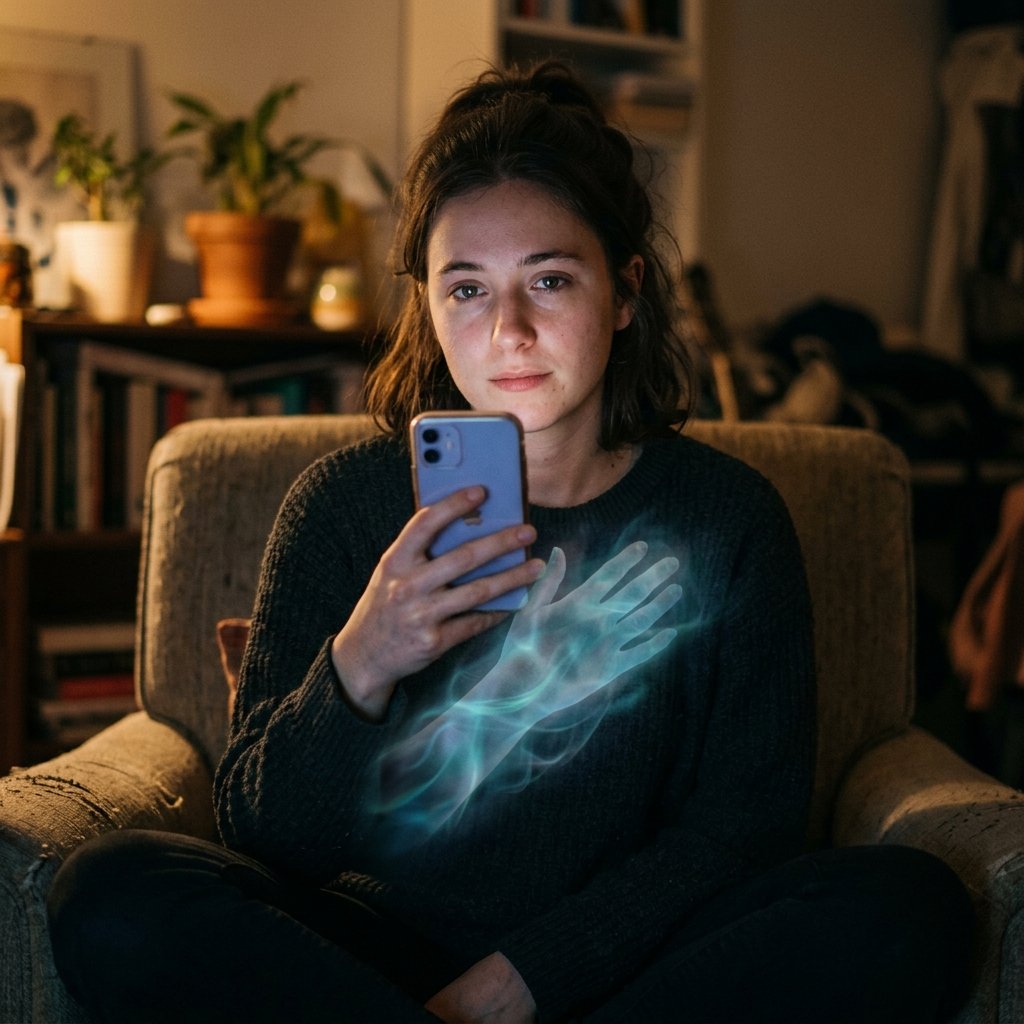
If you stare at human behavior long enough, you eventually hit a profoundly uncomfortable realization.
Given the choice, we will almost always choose misery over joy.
We actively seek the shit out. We read comment sections on articles we know will infuriate us. We pick fights with family members at Thanksgiving. We lie awake in comfortable beds and voluntarily conjure up scenarios that make our stomachs churn. We have access to infinite art and knowledge, yet we spend hours doomscrolling through digital timelines specifically designed to piss us off.
Why do we do this? Why do we consistently and voluntarily choose to be miserable?
The standard lazy explanation is that we are just broken. People assume the modern internet has simply mutated our brains into hateful, polarized anxiety machines.
But the actual reason is much stranger. To understand why we choose misery, we have to look at a deeply weird glitch in human neurobiology.
The Ghost in the Nerves
When a human being loses an arm or a leg in a traumatic accident, the brain does not simply accept the loss and move on.
Instead, the brain frequently hallucinates that the limb is still there. This is called Phantom Limb Syndrome. Amputees will feel the distinct sensation of clothing brushing against a leg they no longer have. They will feel their missing fingers cramping. Most commonly, they experience intense, agonizing pain in an arm that was severed years ago.
The brain’s map of the body is so deeply hardwired that it refuses to let go. The nervous system is so desperate to feel the missing piece that it will literally invent pain out of thin air, just to convince itself the limb still exists.
It is a tragedy of biology. The pain is a desperate hallucination of a severed connection. The brain actively chooses the misery of a phantom limb because the alternative is feeling absolutely nothing at all. And absolute nothingness is unacceptable.
But why does the brain hallucinate pain? Why not hallucinate a phantom tickle, phantom warmth, or phantom joy?
Because in neurobiology, joy is a reward for safety. Pain is a fucking alarm bell.
When a limb is severed, the sudden, deafening silence of the nerve endings is interpreted by the brain as a massive, life-threatening crisis. The brain screams in pain because it is desperately trying to force a signal through the void. It is an alarm system firing at maximum volume, demanding that the organism fix the severed connection.
The Prosthetic of Misery
Now, look at the physical reality of how we live today.
Over the last fifty years, we have systematically amputated our physical communities. We no longer have bowling leagues. We do not have front porches. We barely know the people living next door. We have retreated into our climate-controlled, individual boxes, ordered our groceries through an app, and completely severed the messy, high-friction, physical reality of the village.
This severing creates a terrifying vacuum of connection. It creates an unbearable emotional numbness.
But the human heart does not just accept that loss. We are biologically hardwired to belong to a tribe. We are built to care, to protect, and to feel connected to a group. We simply cannot handle the numbness.
So, we choose misery.
When we sit in the dark, furiously arguing with strangers on a timeline, or when we actively seek out outrage, we are not actually filled with hate. We are experiencing the Phantom Limb of a severed community.
Our hearts are so desperate to feel connected to a tribe that they will hallucinate one. The algorithm did not make us evil. It simply handed us a prosthetic limb made entirely out of outrage. When we get mad at the “other side,” we instantly feel a rush of solidarity with “our side.” Misery requires an object. You have to be miserable about something, which means you are connected to something.
The anger is just a cheap, synthetic substitute for belonging. We choose misery because feeling angry feels closer to community than feeling absolutely nothing at all.
The Pick-Me-Up
This is the perfect mirror of our own design. We built the modern world to give us exactly what we asked for: a life without any of the actual, physical bullshit of having to deal with real people.
But here is the strangely uplifting truth about all of this.
The exhaustion and the rage we see on the internet is not proof that we are broken. The fact that we actively choose misery over joy is not proof that humanity is doomed.
It is actually proof that the human heart is working perfectly.
Our capacity for empathy and connection is so powerful, and so deeply hardwired into our biology, that when it is starved of a real community, it will literally hallucinate a digital war just to have a reason to care. We refuse to accept the numbness.
The outrage on the timeline is not hate. It is just love with nowhere to go.
It is the phantom itch of a severed connection. And we will sit in the dark, bathed in the blue light of a screen, voluntarily enduring the agony of it, simply because the pain proves that the heart is still beating.